
Why You Need a Lawyer if You Were Hurt in a Chicago Building Collapse
In the aftermath of a collapse, confusion and panic replace clarity. Multiple contractors, engineers, and insurers may rush to protect their interests, not yours. Evidence can vanish, reports can be altered, and liability may be shifted. Without legal guidance, you could lose your right to fair compensation before your case even begins.
A skilled Chicago building collapse lawyer can:
- Investigate the cause with structural and engineering experts
- Preserve debris, blueprints, and witness evidence before it disappears
- Identify all responsible parties, including property owners and contractors
- Access OSHA and Chicago Building Department reports
- Negotiate aggressively with insurance companies or pursue litigation
At Phillips Law Offices, we take immediate action to protect victims and ensure justice is served.
Evidence That Disappears the Fastest
A construction site is not preserved the way a car accident scene is. Once emergency responders clear a collapse, cleanup crews move in. Debris gets hauled away. Damaged materials get scrapped. A building department may order the remaining structure demolished for public safety before an independent expert ever examines it.
That means the single most time-sensitive step after a collapse is sending preservation letters, sometimes called litigation hold notices, to the property owner, general contractor, and any subcontractor whose work is suspected in the failure. These letters legally obligate the recipient to preserve physical evidence, internal communications, and inspection records. Waiting even a few days can mean the difference between a strong case and one built entirely on secondhand accounts.
Why Might a Building Collapse in Chicago, IL?
Chicago’s ongoing development means new high-rises and renovations appear every month, but with growth comes risk. Most collapses are not random. They are preventable disasters caused by negligence, defective design, or lack of maintenance.
Common Causes of Building Collapses in Chicago:
- Negligent construction practices or use of substandard materials
- Design or architectural flaws in structural calculations
- Poor maintenance of aging or weakened structures
- Overloading of floors, scaffolds, or equipment
- Unsafe renovations, demolitions, or excavation work
- Foundation failures from water damage or soil erosion
- Skipped or falsified inspections, and permits pulled for one scope of work while a different, unpermitted scope was actually performed
What an OSHA Citation Does, and Doesn’t, Prove
When a collapse is serious enough to injure or kill someone, OSHA typically investigates and, if it finds violations, issues citations against the employer, and sometimes against a general contractor who controlled the site even if that contractor didn’t employ the injured worker directly. Under what’s known as OSHA’s multi-employer citation policy, a general contractor with overall responsibility for site safety can be cited for a hazard created by a subcontractor if the general contractor knew or should have known about it and failed to act.
An OSHA citation is not the same thing as a finding of civil negligence, and it does not automatically win your case. But it is powerful evidence. A citation for an unsafe scaffold, inadequate shoring, or a missed inspection gives your attorney a documented, government-verified safety failure to build the negligence claim around, rather than starting from scratch with expert testimony alone.
Permits, Inspections, and the Paper Trail Behind a Collapse
Every legitimate construction or renovation project in Chicago requires permits from the Department of Buildings, along with a schedule of inspections tied to specific stages of the work, framing, electrical, structural, and final occupancy among them. When a collapse happens, that permit and inspection history becomes part of the evidence. A missing permit for structural work, an inspection that was scheduled but never actually performed, or a sign-off from an inspector who never visited the site are all red flags an attorney and structural engineer will look for. In some cases, the paper trail shows the work performed didn’t match what was permitted at all, which is itself strong evidence of negligence independent of the engineering cause of the collapse.
Who Can Be Held Financially Accountable for a Building Collapse?
Building projects often involve dozens of entities, each with a role in safety and oversight. Determining who is liable requires deep investigation and expert analysis. In many cases, several parties may share responsibility for the collapse.
Potentially Liable Parties Include:
- General contractors and site supervisors
- Subcontractors responsible for unsafe work or materials
- Property owners or landlords who ignored maintenance
- Architects and engineers who created defective designs
- Manufacturers and suppliers of defective materials
- Inspectors or code enforcement officials (in rare cases)
Your attorney’s goal is to connect the dots, identifying exactly where negligence occurred and who must be held accountable.
Related reading: Third-Party Construction Injury Claims
How Fault Gets Divided Among Multiple Defendants
Collapse cases rarely have a single defendant. A general contractor, a structural engineer, and a materials supplier might all bear some responsibility for the same failure. Under 735 ILCS 5/2-1116, Illinois follows a modified comparative negligence rule: you can recover damages as long as you are not more than 50 percent at fault, and your award is reduced by your own percentage of fault. In a building collapse claim you are almost never at fault at all, but the same statute governs how fault is split among the defendants.
Where a jury finds a defendant more than 25 percent at fault for a collapse, 735 ILCS 5/2-1117 makes that defendant jointly and severally liable for the full amount of your economic damages, meaning you can collect the whole judgment from whichever defendant actually has the money, insurance, or assets to pay. This matters in practice: a small drywall subcontractor might be found partly at fault but have no meaningful insurance, while the general contractor carries a large commercial policy. Joint and several liability is often what makes a collapse case collectible at all.
Our Chicago Lawyers Handle All Building Collapse Injury Claims
At Phillips Law Offices, we represent victims of every type of collapse, from crumbling apartment buildings to job-site structural failures. These cases demand not only legal experience but also technical knowledge of construction practices and safety standards.
Common Injuries in Building Collapse Cases:
- Crush injuries, amputations, and fractures
- Traumatic brain injuries (TBI) and concussions
- Spinal cord injuries leading to paralysis
- Severe burns and internal injuries
- Permanent disability or loss of limb function
- Post-traumatic stress disorder (PTSD) and emotional trauma
- Fatal injuries resulting in wrongful death claims
We work with medical specialists, life-care planners, and financial experts to calculate both immediate and long-term damages.
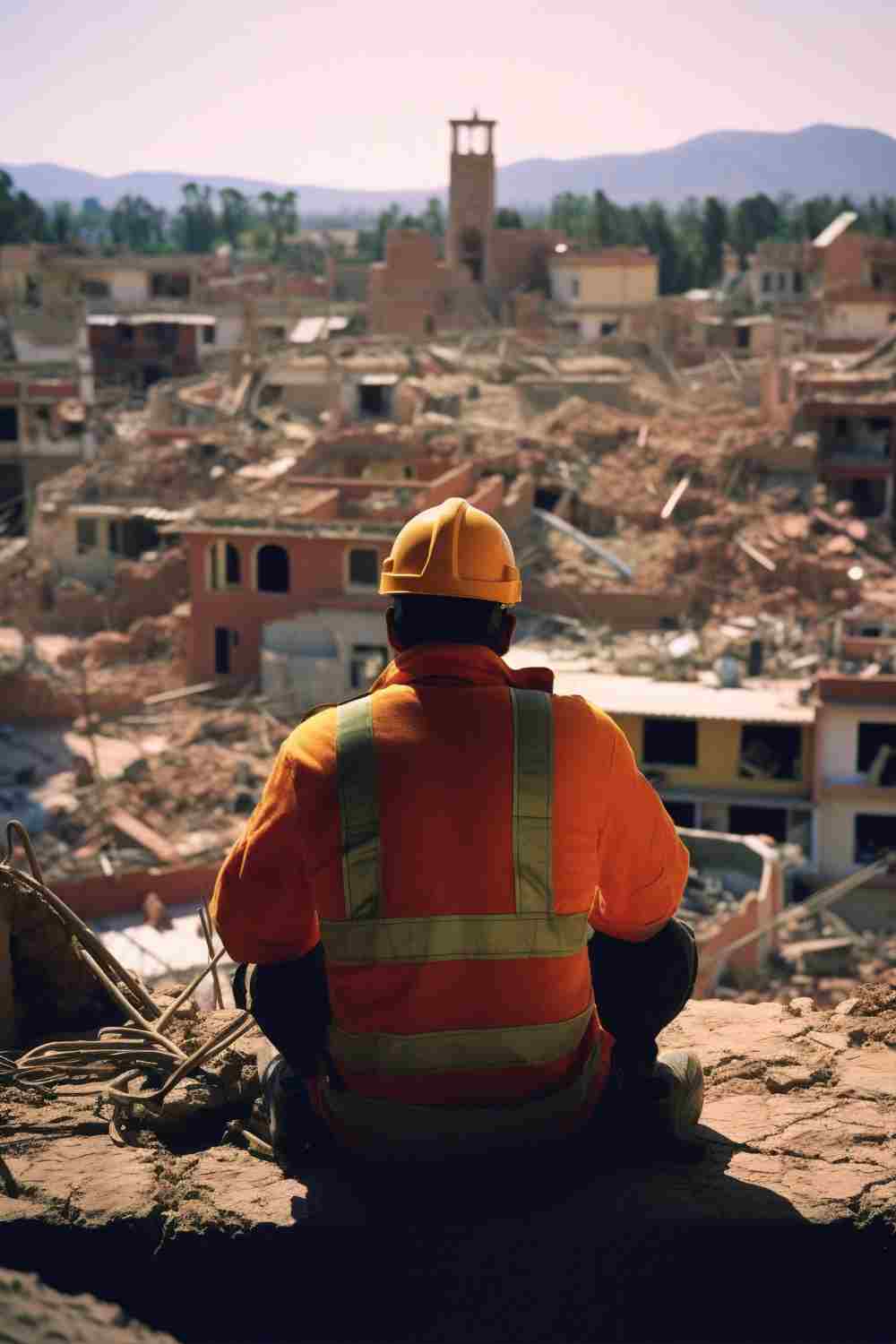
When a Collapse Is Fatal
When a building collapse kills a worker or bystander, the family’s legal options shift. A surviving spouse, child, or next of kin can bring a claim under the Illinois Wrongful Death Act (740 ILCS 180) for the financial support, companionship, and guidance the deceased would have provided. Separately, the estate itself can bring a claim under the Illinois Survival Act (755 ILCS 5/27-6) for the pain, suffering, and medical expenses the victim personally incurred between the collapse and their death, even if that was only a matter of hours. These are two distinct claims with different beneficiaries, and both are frequently pursued together in a fatal collapse case.
How Do I Get Compensation if I Was Hurt in a Building Collapse?
Victims of a collapse may have multiple legal options for recovery, depending on where and how the incident occurred.
1. Workers’ Compensation Claim
If you were injured while working on a construction site, you may qualify for Illinois workers’ compensation. This program provides medical coverage, partial wage replacement, and disability benefits, but it does not cover pain and suffering or emotional losses. Under 820 ILCS 305/5(a), workers’ comp is your exclusive remedy against your own employer, which is exactly why the third-party claim described below matters so much in a multi-contractor collapse.
2. Third-Party Personal Injury Lawsuit
If a subcontractor, engineer, or property owner’s negligence contributed to your injuries, you can file a third-party personal injury claim for:
- Pain and suffering
- Loss of future earnings
- Permanent disfigurement or disability
- Ongoing medical treatment and therapy costs
If you already received workers’ comp benefits, your comp carrier will typically hold a lien against this third-party recovery under 820 ILCS 305/5(b), so a portion of the settlement reimburses the benefits you already collected. An attorney handling both claims together can often negotiate that lien down, which keeps more of the recovery in your pocket.
3. Product Liability Claim
If defective materials or structural components contributed to the collapse, such as a failed steel connector, a mislabeled load rating, or a scaffold component that didn’t meet its stated specifications, you may also have a product liability case against the manufacturer or supplier. These claims run on their own separate timeline under Illinois law, which is one more reason every potentially responsible party needs to be identified early, before evidence of the defect is discarded or the component is scrapped.
Illustrative Example
Consider a hypothetical: a scaffold section on a Chicago high-rise renovation fails because a coupling pin, rated for a lower load than the platform actually carried, snaps under normal use. The general contractor didn’t verify the manufacturer’s load rating before installation, and the subcontractor overloaded the platform beyond even that rating. Here, the injured worker could pursue workers’ comp against their direct employer, a third-party claim against the general contractor and any subcontractor whose negligence contributed, and a product liability claim against the coupling pin’s manufacturer, all three running at the same time. This kind of layered claim is common in collapse cases and is exactly why early investigation matters.
Filing a Personal Injury Lawsuit Against a Negligent Party
Unlike a workers’ compensation claim, a building collapse lawsuit is a civil action designed to secure financial recovery, not punishment. Your attorney must prove four key elements:
- The defendant owed you a duty of care
- They breached that duty through negligence
- The breach directly caused your injury
- You suffered measurable financial or personal damages
Evidence may include engineering reports, OSHA records, photos, and witness testimony. Our lawyers know how to build compelling cases and hold powerful corporations accountable.
Learn more: How Our Law Firm Helps Injured Workers
Time Limits Can Impact Your Right to Compensation
Under 735 ILCS 5/13-202, victims generally have two years from the date of the collapse to file a personal injury lawsuit in Illinois. If a government entity, such as the City of Chicago, the Chicago Housing Authority, or a public school district, owns or manages the property involved, that window shrinks dramatically: 745 ILCS 10/8-101 gives you only one year to sue, and separate notice requirements can apply even sooner. If you miss these deadlines, you may lose your right to recover compensation forever, regardless of how clear the negligence was.
Because investigating structural collapses takes time, expert engineers need to examine debris, review design documents, and reconstruct what happened, it’s critical to contact a Chicago personal injury attorney as soon as possible. Waiting even a few months can mean starting the investigation with less evidence and less time to build the case.
Related page: Common Challenges Workers Face in Illinois Workers’ Compensation Claims
Frequently Asked Questions
Can I file a claim if I wasn’t a construction worker, just a bystander or tenant?
Yes. Property owners, contractors, and engineers owe a duty of care to anyone lawfully on or near the property, not just to workers. Bystanders and tenants injured in a collapse can pursue a third-party negligence claim directly, without going through the workers’ compensation system at all.
What if the building was demolished before I could get an expert to inspect it?
This happens often, since public safety usually requires clearing an unstable structure quickly. Your case doesn’t end there. Investigators rely on photographs, drone footage, OSHA’s own inspection records, permit history, and engineering calculations from the original design to reconstruct the failure even after the physical evidence is gone.
Do I need to prove the exact cause of the collapse myself?
No. That’s the job of the structural and forensic engineering experts your attorney retains. Your responsibility is to seek medical treatment, document your own injuries and losses, and get legal help early enough that the investigation can still happen properly.
Can I still recover if I was partly at fault, for example if I ignored a posted warning sign?
Possibly. Under Illinois’s modified comparative negligence rule, you can still recover as long as you’re found 50 percent or less at fault, though your award is reduced by your percentage of fault. Whether a warning sign was adequate, visible, or even relevant to how the collapse actually occurred is itself often a contested fact.
Does an OSHA citation automatically mean I’ll win my case?
No, but it helps significantly. An OSHA citation documents a government-verified safety violation, which gives your attorney a strong evidentiary anchor. Your civil case still has to independently establish duty, breach, causation, and damages, but a citation makes that job considerably easier.
How long does a building collapse lawsuit typically take?
Longer than a routine slip-and-fall case, usually. The multi-party investigation, expert engineering analysis, and frequent involvement of multiple insurance carriers add time. Serious collapse cases can take one to three years to resolve, sometimes longer if it proceeds to trial, though catastrophic-injury cases are rarely rushed if it means leaving compensation on the table.
What role does insurance play in a building collapse claim?
Nearly every party involved, the general contractor, subcontractors, the property owner, and any equipment or materials supplier, typically carries some form of commercial general liability insurance, and larger commercial projects often require additional umbrella or excess policies on top of that. Part of the early investigation is identifying every applicable policy, since a collapse serious enough to cause catastrophic injury can easily exceed a single policy’s limits. This is one more reason joint and several liability under 735 ILCS 5/2-1117 matters: it lets your attorney pursue whichever combination of defendants and policies actually has enough coverage to make you whole.
Call Our Chicago Construction Accident Law Firm for a Free Consultation
A building collapse can destroy more than property, it can destroy futures. You deserve justice and a chance to rebuild your life.
At Phillips Law Offices, our attorneys have the experience and resources to investigate complex structural failures and fight for maximum compensation. We handle all cases on a contingency fee basis, meaning you pay nothing unless we win your case.
Call us today (312) 346-4262 to speak directly with a Chicago building collapse lawyer who will stand up for your rights and your future.
Attorney Advertising. This page provides general information about Illinois law and is not legal advice. Reading it does not create an attorney-client relationship. Deadlines and outcomes depend on the specific facts of your case — speak to a licensed Illinois attorney about your situation. Contingency fees cover legal fees only. Clients may remain responsible for case costs and expenses such as filing fees, expert witnesses, and medical records.