
Most Illinois workers know about workers’ compensation. Fewer realize they may also have a separate personal injury claim against someone other than their employer, and that claim can pay for things workers’ comp never covers. At Phillips Law Offices, we review every work injury case for exactly this possibility, because missing a viable third-party claim can mean leaving tens or even hundreds of thousands of dollars unclaimed.
What Is a “Third Party” in a Work Injury Case?
A third party is anyone other than your employer or a co-worker whose negligence contributed to your injury. Workers’ compensation covers medical bills and a portion of lost wages regardless of fault. It does not cover pain and suffering, emotional distress, loss of normal life, or punitive damages. A third-party lawsuit can.
- A negligent driver who hits you on a work delivery route
- A subcontractor who left a construction site unsafe
- A property owner who failed to maintain safe premises
- A manufacturer that sold defective machinery or safety equipment
- A maintenance company that skipped a safety inspection
Why You Can’t Sue Your Own Employer, and Why That Doesn’t Close the Door
The Illinois Workers’ Compensation Act (820 ILCS 305/5(a)) contains what lawyers call the “exclusive remedy” rule. In exchange for no-fault benefits, you don’t have to prove your employer did anything wrong, you generally give up the right to sue your employer in civil court, even if the employer was careless.
That trade-off applies to your employer. It does not apply to anyone else. A general contractor who isn’t technically your employer, a supplier, a driver, a property owner two blocks away, none of them get exclusive-remedy protection just because the injury happened at work. This is the legal foundation the entire third-party claim rests on, and it’s worth understanding before you assume “I already filed workers’ comp, so that’s it.”
The Subrogation Lien: What Happens to Your Workers’ Comp Benefits If You Win
Here’s something most people never hear until it’s already relevant to their case. Under 820 ILCS 305/5(b), if you recover money from a third-party lawsuit, your employer’s workers’ comp insurance carrier has a statutory right to be reimbursed out of that recovery, for the medical bills and wage benefits it already paid you.
This isn’t a penalty. It’s how Illinois law prevents a double recovery for the same injury. The formula is more forgiving than people expect, though: the statute reduces the lien by the insurer’s proportionate share of your attorney’s fees and costs, and in practice a well-negotiated settlement often nets the injured worker a meaningfully larger final number than either claim would have produced alone. Structuring this correctly, and negotiating the lien down where the law allows it, is a big part of what makes handling both claims together valuable instead of just filing them separately and hoping for the best.
Common Third-Party Scenarios in Illinois Work Injury Cases
1. Construction and Contracting Accidents
Construction sites in Chicago routinely have five, ten, sometimes twenty different companies working the same job. A worker employed by one contractor gets hurt because another contractor’s crew, a subcontractor, or an equipment supplier ignored a safety rule that had nothing to do with the injured worker’s own employer.
- Scaffolding collapses from improper assembly by a different crew
- Crane or forklift accidents caused by an operator employed by another company
- Electrocution from unmarked or mislabeled power lines
- Falls from unguarded heights maintained by a different subcontractor
One misconception worth clearing up directly: Illinois used to have a law called the Structural Work Act, sometimes called the “Scaffold Act,” that made it easier to sue over height-related construction injuries. It was repealed in 1995. It does not exist anymore. That doesn’t mean these claims are unavailable, ordinary negligence law, OSHA’s multi-employer citation policy (which assigns responsibility on multi-contractor sites even to a company that didn’t directly employ the injured worker), and general contractor safety-duty case law all still apply. It just means the legal theory is different than it was thirty years ago, and an attorney unfamiliar with that history can misjudge the case.
2. Defective Machinery, Tools, or Equipment
When machinery malfunctions, liability often sits with the manufacturer, distributor, or a company that serviced the equipment, not your employer, who may have done nothing wrong beyond owning a machine someone else built badly.
- Power tools missing required safety guards
- Conveyor systems with a design flaw
- Industrial machines without a working emergency shutoff
- Explosions from a defective pressure vessel or gas container
Illinois recognizes strict products liability, which matters a great deal here. Under strict liability, you generally don’t have to prove the manufacturer was careless, only that the product was unreasonably dangerous when it left their control and that the defect caused your injury. That’s a lower bar than ordinary negligence, and it’s why product-defect cases often move faster once a defect is documented.
3. Work-Related Vehicle Accidents
Delivery drivers, service technicians, home health aides, anyone who drives as part of their job, face this scenario constantly. If another driver causes the crash, you can pursue a third-party auto claim on top of workers’ comp.
Full lost wages. Pain and suffering. Vehicle and property damage. Emotional distress. None of that comes from the workers’ comp side.
4. Premises Liability and Unsafe Property Conditions
Some injuries happen simply because a property wasn’t kept safe, a delivery worker slips on an unshoveled walk outside a client’s building, a technician falls down an unmarked stairwell at a customer’s facility, a home-visit nurse is hurt because a building’s security was inadequate.
5. Negligent Maintenance, Inspection, or Safety Contractors
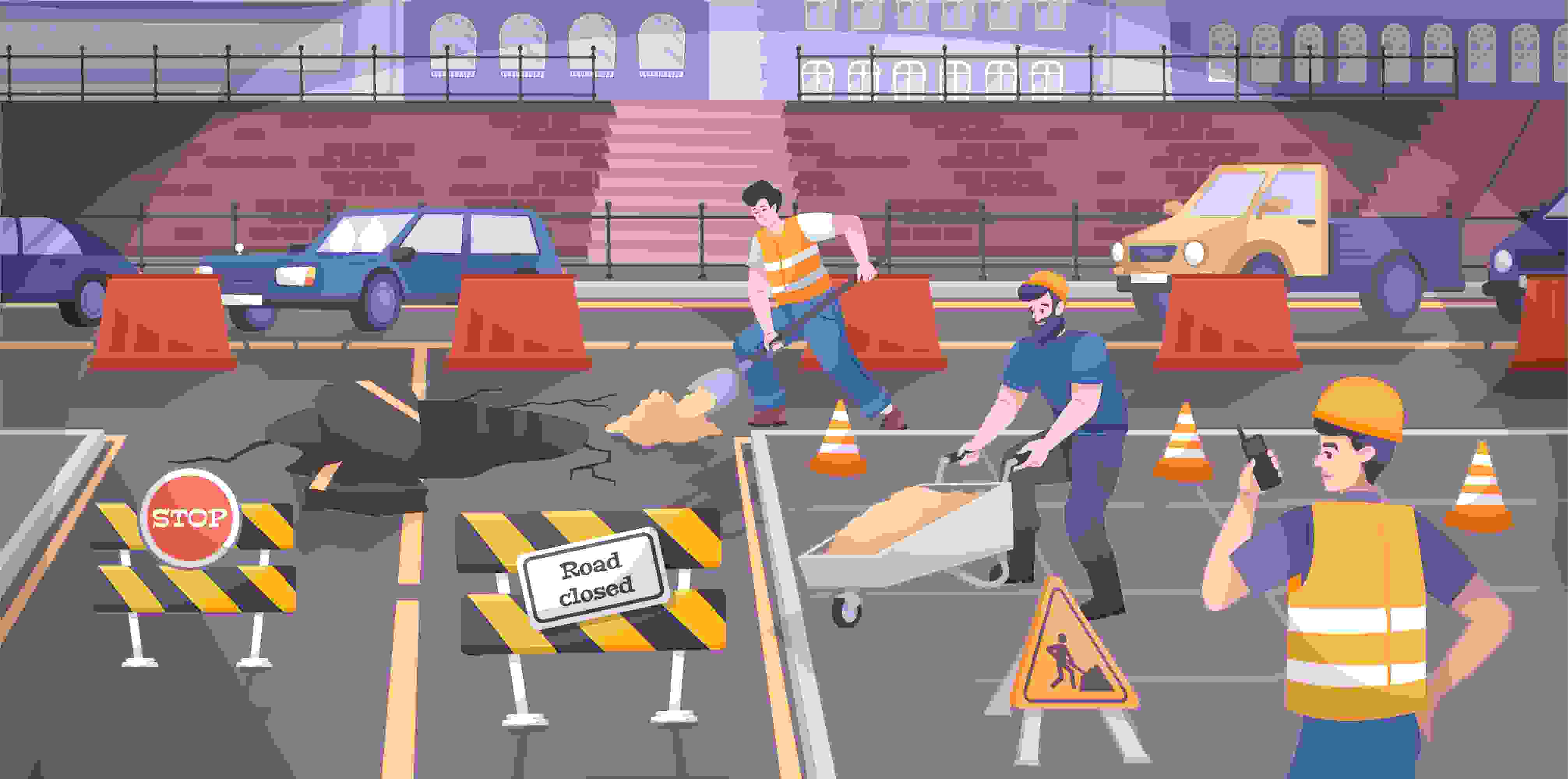
Outside contractors hired to maintain or inspect a workplace can be held liable when their negligence leads to injury, an elevator inspector who misses a mechanical defect, a cleaning contractor who leaves a hazard behind, a safety consultant who signs off on a workplace that wasn’t actually safe.
The “Borrowed Employee” Trap on Multi-Contractor Sites
There’s a wrinkle that catches people off guard on construction sites and in staffing arrangements: the borrowed employee doctrine. If you’re technically employed by Company A but a court finds that Company B was directing your work closely enough, controlling how, when, and where you did your job on a given day, Company B can be treated as a “borrowing employer” for legal purposes. And a borrowing employer gets the same exclusive-remedy protection your actual employer has.
In practice, this means the company you’d most obviously want to sue, the general contractor running the site, the staffing agency’s client, might turn out to be legally immune, the same way your direct employer is. Illinois courts weigh several factors here: who had the right to control the work, who supplied the tools and equipment, whether the work being performed was part of the borrowing employer’s regular business, and how the pay arrangement worked. None of these factors is automatically decisive on its own.
This is exactly the kind of issue that can quietly sink a third-party claim if it isn’t caught early, a claim that looks strong on the surface can collapse if the defendant successfully argues borrowed-employee status. It’s also why a thorough investigation into the actual working relationship, not just who issued the paycheck, matters before deciding who to name as a defendant.
Evidence That Makes or Breaks a Third-Party Claim
Third-party claims live or die on documentation, and a lot of it disappears fast if nobody asks for it.
- OSHA citation and inspection records, often obtainable through a Freedom of Information Act request, and frequently the single most persuasive piece of evidence in a multi-contractor negligence case
- Incident reports filed by the property owner, general contractor, or staffing agency, these are usually written within hours of the accident and can contain admissions nobody meant to make
- Equipment maintenance and inspection logs, which can show a machine was overdue for service or had a known, unaddressed defect
- Site safety meeting minutes and toolbox talk records, which can establish whether a known hazard had already been flagged and ignored
- Surveillance or dashcam footage, which many commercial properties and vehicles retain for only a short window before it’s overwritten
A preservation letter sent to every potentially responsible party within days of the injury, not weeks, is often the difference between having this evidence and not. Waiting until a claim is formally filed is usually too late for the footage, at minimum.
A Hypothetical, to Make This Concrete
Here’s a scenario that illustrates how this plays out, not a real case, just an example of how the pieces fit together. A warehouse worker is hurt when a forklift, operated by an employee of a staffing agency the warehouse contracted with, backs into a pallet rack that collapses on him. Workers’ comp pays his medical bills and two-thirds of his wages while he’s out. Separately, because the forklift operator worked for the staffing agency and not for his own employer, he has a third-party negligence claim against that agency. If he settles that claim for a substantial sum, the workers’ comp carrier is entitled to reimbursement from it under 820 ILCS 305/5(b), but after that lien is resolved, he still walks away with meaningfully more than workers’ comp alone would have paid, including compensation for pain and suffering that workers’ comp never covers at all.
Why Third-Party Claims Matter: Maximizing Your Recovery
Workers’ compensation exists to get injured workers medical care and partial income fast, without a fight over fault. That speed comes at a cost: it caps what you can recover. A third-party claim removes that cap.
- Full wage loss, not the roughly two-thirds workers’ comp pays
- Pain and suffering, physical and emotional
- Future medical costs workers’ comp doesn’t fully cover
- Loss of normal life and permanent disability
- Punitive damages, in the rare case of truly reckless conduct
The Deadline You Cannot Miss
A third-party personal injury claim in Illinois is generally subject to a two-year statute of limitations under 735 ILCS 5/13-202, running from the date of the injury. That clock is separate from any workers’ compensation filing deadline, meeting one does not extend the other, and missing the two-year window on the third-party side can permanently bar that claim even if your workers’ comp case is still open. If a government entity is a potential defendant (a municipal snowplow, a public agency’s maintenance crew), a much shorter notice deadline can apply, sometimes as little as one year, so the sooner a case gets evaluated the more options stay open.
How Comparative Negligence Affects What You Recover
Illinois follows a modified comparative negligence rule under 735 ILCS 5/2-1116. If you’re found partly at fault, your recovery is reduced by your percentage of fault, and if you’re found more than 50% at fault, you recover nothing at all.
Say a jury finds your total damages at $400,000, but decides you were 20% responsible for the accident (maybe you were in an area you weren’t supposed to be). Your recovery drops to $320,000. That’s still a real number. But it’s why the other side’s lawyers spend so much energy trying to shift blame onto the injured worker, and why documenting the actual sequence of events early matters more than most people realize.
How Phillips Law Offices Builds a Strong Third-Party Case
- Independent investigation, witness statements, photos, video, OSHA reports
- Expert consultation with engineers, forensic analysts, and workplace safety specialists
- Mapping every potentially liable party, not just the obvious one
- Coordinating multiple insurers at once, including the workers’ comp lien negotiation
- Preparing for trial from day one, even when most cases ultimately settle
We’ve recovered substantial settlements for injured workers by identifying liability that wasn’t obvious at first glance, a subcontractor two layers removed, an equipment manufacturer, a property management company nobody initially considered.
When You Should Consider a Third-Party Claim
Worth exploring if any of these apply:
- Someone outside your employer’s organization contributed to your injury
- Defective equipment, a vehicle, or an unsafe property was involved
- Your injuries are serious or permanent
- You suspect negligence or a product defect played a role
If your employer tells you workers’ comp is your only option, that’s not necessarily true. Get a second opinion before you assume it.
Mistakes That Weaken a Third-Party Claim
A few patterns show up again and again in cases that come to us after the injured worker already tried handling things alone.
Giving a recorded statement to the third party’s insurance adjuster without legal advice first. Adjusters are trained to ask questions in a way that gets you to minimize your own injuries or accidentally accept partial blame, often within the first week, before you even know how serious the injury really is.
Accepting a quick settlement offer before treatment is finished. Once you sign a release, that’s the end of the case, even if it turns out you need surgery six months later. Insurers know this and sometimes move fast for exactly that reason.
Assuming there’s only one responsible party. Multi-contractor sites and supply chains routinely involve two, three, or more potentially liable companies. Naming only the most obvious one can leave real money on the table, or worse, mean the case falls apart if that one defendant turns out to have borrowed-employee immunity.
Waiting too long to get evidence preserved. Video footage, equipment in its post-accident condition, and witness memories all degrade fast. Two years sounds like a long time until you realize most of the useful evidence needed to disappear within the first few weeks.
Frequently Asked Questions
Can I file a third-party claim and a workers’ comp claim at the same time?
Yes. They run on separate tracks, though the workers’ comp insurer’s lien connects them financially once the third-party case resolves.
Will filing a third-party claim affect my workers’ comp benefits?
Not directly, you can continue receiving workers’ comp benefits while a third-party case is pending. The interaction happens at the end, through the reimbursement lien, not during.
What if more than one third party is responsible?
You can pursue claims against multiple defendants in the same case. Illinois allows apportioning fault among several responsible parties.
Does it matter if the third party is also an Illinois company, or could it be out of state?
It can be either. Out-of-state manufacturers and national contractors are sued in Illinois courts routinely, though jurisdiction and service of process can get more complicated. That’s a detail worth having an attorney handle rather than navigating alone.
How long does a third-party case typically take?
It varies enormously depending on the number of defendants, whether liability is contested, and whether the case settles or goes to trial. Some resolve in months; cases with multiple defendants and expert testimony can take well over a year.
What if I already accepted a settlement offer from the third party’s insurer without a lawyer?
Have it reviewed before you sign anything, if you haven’t already. Once a release is signed, undoing it is extremely difficult even if the amount turns out to be far below what your case was worth.
Does the workers’ comp insurer get a say in how I handle the third-party case?
Not in how you litigate it, but they do have a right to be kept informed given their lien interest, and their attorney can sometimes participate in settlement discussions to protect that reimbursement right. Coordinating this properly is part of what an attorney handling both sides of the case does for you.
Hurt on the job by someone other than your employer? Call Phillips Law Offices at (312) 346-4262 for a free case review. We’ll tell you honestly whether a third-party claim exists, and if it does, we’ll pursue both claims together so nothing gets left on the table.
Attorney Advertising. This page provides general information about Illinois law and is not legal advice. Reading it does not create an attorney-client relationship. Deadlines and outcomes depend on the specific facts of your case — speak to a licensed Illinois attorney about your situation.