
If you were injured on a Chicago construction site, whether in the Loop, River North, or the South Side, this guide answers the questions injured workers ask most: who’s responsible, what workers’ compensation actually pays for, when you can sue beyond the comp system, and how long you have to act under Illinois law.
Who is responsible for keeping a Chicago construction site safe?
Construction sites usually involve multiple parties with overlapping safety duties, which is exactly why liability investigations take real work. Potentially responsible parties include:
- General contractors, who oversee the jobsite and enforce the safety program.
- Subcontractors, who must protect their own crews and avoid creating hazards for everyone else on site.
- Site owners & developers, who must keep the property reasonably safe and code-compliant.
- Supervisors & safety managers, who enforce daily safety procedures and inspections.
- Architects & engineers, who can be liable for design-related failures.
- Equipment manufacturers & rental companies, who may be responsible for defective machinery or tools.
Because so many parties share responsibility, construction liability often becomes complex, and it’s rarely obvious at first glance which one actually caused your injury. See how Illinois defines a workplace injury for the legal threshold your case has to clear.
Do OSHA citations after an accident help my case?
Often, yes, and this is one of the most underused pieces of evidence in construction injury cases. When OSHA investigates a serious jobsite injury, it can issue citations against the general contractor or subcontractors for specific standard violations, missing fall protection, an unguarded trench, an unsafe scaffold. Illinois courts generally don’t let a plaintiff use an OSHA citation as automatic proof of negligence in a civil case (OSHA violations aren’t themselves a private right of action), but the underlying facts, the inspector’s report, cited standards, photographs, witness statements, are powerful evidence of what a reasonably safe jobsite should have looked like and how far this one fell short. That’s part of why requesting the full OSHA case file early, before records get harder to obtain, is a standard step in building a strong third-party claim.
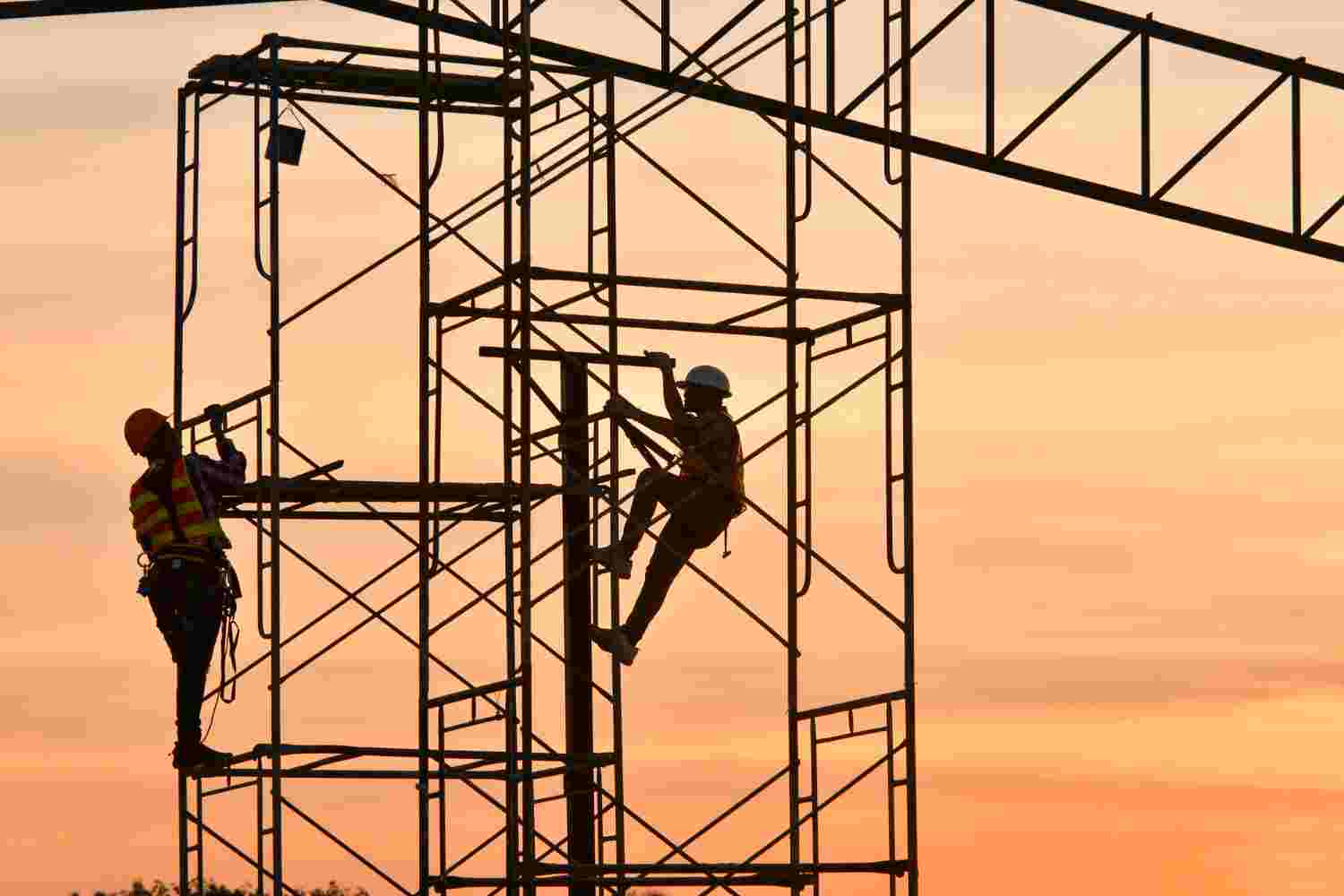
Scaffolding falls, what Illinois and OSHA protections apply?
Falls from scaffolds are among the most serious construction injuries, and Illinois enforces federal OSHA scaffold standards (29 CFR 1926 Subpart L) on top of state requirements covering:
- Proper scaffold assembly and anchoring
- Daily inspections and maintenance
- Guardrails and fall-arrest systems
- Safe load limits and platform integrity
- Proper worker training on scaffold use
Note that Illinois’ old Structural Work Act, sometimes still called the “Scaffolding Act” by older sources, was repealed in 1995. It no longer provides an independent basis for a scaffold-fall claim, today’s cases rely on OSHA standards as evidence of the standard of care, ordinary negligence principles, and workers’ compensation, not that older statute. If your injury was caused by a collapse, missing guardrails, overloaded platforms, or improper installation, you may be entitled to workers’ compensation and a third-party claim against whichever company installed or maintained the scaffold, if that company wasn’t your direct employer.
Can I sue my employer after a Chicago construction injury?
Generally, no. Under 820 ILCS 305/5(a), workers’ compensation is your exclusive remedy against your direct employer, meaning you can’t sue your own employer in civil court for a workplace injury even if their negligence caused it. What you can do is sue other parties who contributed to your injuries but weren’t your employer, commonly called third-party claims. Examples include:
- Another subcontractor whose actions created the hazard
- A supplier whose equipment failed
- A property owner who failed to maintain safe conditions
- An equipment manufacturer for defective parts
Third-party lawsuits often yield compensation well beyond what workers’ comp provides, since they aren’t capped by the comp system’s benefit schedule. Read more about third-party liability in work injury cases.
What does workers’ compensation cover after a construction accident?
Workers’ compensation in Illinois provides real benefits but has real limits. Typical benefits include:
- Medical care: surgery, hospitalization, therapy, medications, medical devices, follow-up care.
- Temporary wage replacement: usually two-thirds of your average weekly earnings, subject to statutory caps that adjust twice a year.
- Permanent disability benefits: for long-term impairment or loss of function.
- Vocational rehabilitation: retraining and job placement if you can’t return to your previous trade.
Workers’ comp does not pay for pain and suffering, your full lost wages, or punitive damages. That gap is exactly why many injured workers pursue both a comp claim and a separate third-party lawsuit at the same time. See workers’ compensation vs. personal injury claims for a fuller comparison.
Is workers’ compensation my only route to recovery?
No. If a party other than your employer caused or contributed to the accident, you can file a civil lawsuit for additional damages. Common third-party scenarios include:
- Crane or equipment collapse caused by a subcontractor
- Defective ladder or tool from a manufacturer
- Delivery truck hitting a worker on site
- Scaffold installed by another company failing
A successful third-party suit lets you recover damages that workers’ comp doesn’t cover: full lost income, pain and suffering, and future earning-capacity losses. If that third-party claim settles or wins, note that your workers’ comp carrier holds a lien against the recovery under 820 ILCS 305/5(b) to recoup what it already paid out, which is one of several reasons this kind of case needs someone coordinating both tracks at once.
Can I pursue a lawsuit while I am receiving workers’ compensation?
Yes. Workers’ compensation and third-party lawsuits are separate legal paths that run on separate tracks. Workers’ comp covers medical bills and partial wage replacement while a civil lawsuit can recover full economic losses and non-economic damages like pain and suffering. It’s common for injured workers to proceed with both claims concurrently, and an attorney handling both will make sure the comp carrier’s subrogation lien gets resolved correctly out of the third-party recovery rather than becoming a surprise later.
My employer was a subcontractor. Can I still go after the general contractor?
Often, yes, and this is one of the most misunderstood parts of construction injury law. Under OSHA’s multi-employer worksite doctrine, a general contractor that controls overall site safety can be held responsible for a hazard even when the injured worker was employed by a subcontractor, not the GC directly. Because the exclusive-remedy rule in 820 ILCS 305/5(a) only blocks a lawsuit against your direct employer, a general contractor that isn’t your employer is a legitimate third-party defendant if it created or ignored the hazard that hurt you. This is exactly the kind of relationship that makes a full site investigation, not just a quick incident report, worth doing early.
It also creates a common defensive tactic worth knowing about: the general contractor and subcontractor pointing at each other, each arguing the other one controlled the hazard. That fight over who was in charge of the specific work area at the time doesn’t resolve itself, it gets resolved through contracts, site logs, and testimony about who actually directed the work, which is exactly why an early, independent investigation matters more than whichever explanation the companies settle on among themselves.
How do I find out who was responsible for the construction accident?
Identifying the responsible parties requires a thorough investigation. A qualified construction-accident lawyer will typically:
- Collect site plans, safety logs, and incident reports
- Interview eyewitnesses and co-workers
- Obtain surveillance footage or photographs before it’s overwritten
- Review OSHA and municipal inspection records
- Arrange expert analysis (engineering, equipment failure, accident reconstruction)
Because many companies share the site, liability is often distributed across several parties in different proportions, and skilled counsel is needed to assemble the case rather than accept the first, most convenient explanation. Learn more about how our law firm helps injured workers.
What kinds of compensation can I seek in a Chicago construction injury lawsuit?
A successful third-party personal injury claim can provide full compensation for:
- Past and future medical expenses beyond what workers’ comp already paid
- Full lost wages and loss of earning capacity
- Pain and suffering and loss of enjoyment of life
- Permanent disability or disfigurement
- Emotional distress, PTSD, or depression tied to the accident
- Wrongful death damages, where applicable
If fault is shared between you and another party, Illinois’ comparative negligence rule under 735 ILCS 5/2-1116 still lets you recover as long as you’re not more than 50% at fault, though your award is reduced by your own percentage of fault. Say a jury finds a subcontractor 70% responsible for a falling-object injury and you 30% responsible for not wearing required PPE, on a $400,000 verdict, you’d recover $280,000 rather than the full amount. And where multiple defendants share fault, 735 ILCS 5/2-1117 makes each defendant who is at least 25% at fault jointly liable for the full medical and economic damages, so you’re not left chasing a partial recovery from a single company that can’t pay.
Future earning-capacity losses in particular tend to get underestimated when workers try to value their own claim. It’s not just what you’d have earned this year, it’s the difference between your pre-injury trajectory (raises, overtime, moving into a foreman or supervisory role) and what’s realistically available now, which is exactly the kind of number a vocational expert and economist calculate for litigation, not something to estimate off a pay stub.
How long does a Chicago construction accident case take to resolve?
It depends heavily on which track your case is on and how contested it is. A straightforward workers’ comp claim with undisputed liability and a clear medical picture can resolve in a matter of months. A disputed comp claim, where the insurer contests whether the injury is work-related or how much permanent disability resulted, commonly takes a year or more once it heads to arbitration before the Illinois Workers’ Compensation Commission. A third-party civil lawsuit runs on a longer, separate timeline: discovery, depositions, expert reports, and often a year or two before trial or a pre-trial settlement, longer if multiple defendants are pointing at each other over liability. Cases involving a fatality or permanent catastrophic injury tend to take longer still, in part because the full extent of future medical needs and lost earning capacity has to be established with expert testimony before a fair settlement number even exists.
How long do I have to file a construction accident lawsuit in Illinois?
In most cases the deadline, the statute of limitations, is 2 years from the date of injury under 735 ILCS 5/13-202. Important exceptions include:
- Claims against government entities (a public agency, a municipal contractor, a transit authority) carry a much shorter 1-year notice deadline under 745 ILCS 10/8-101, half the standard window, and often require a formal written notice before you can even file suit.
- Wrongful death claims generally must be filed within 2 years of the date of death under the Wrongful Death Act (740 ILCS 180), which can be a different date than the injury itself if the worker survived for a period before dying, and the estate’s personal representative typically also has a Survival Act claim (755 ILCS 5/27-6) for the worker’s own pain and suffering between injury and death.
- Product defect claims against an equipment manufacturer may have additional timing issues tied to when the defect was discoverable, not just when the injury happened.
Missing the deadline can bar your claim permanently regardless of how strong the underlying case is, so take prompt action rather than waiting to see how your recovery goes first.
Do I really need a lawyer for a construction accident case?
Yes, construction injury cases are unusually complex compared to a typical injury claim. Your case may involve:
- Multiple contractors and shifting blame between them
- OSHA rules and technical safety standards that take real expertise to apply correctly
- Engineering and equipment-failure analysis
- Large insurance companies with experienced defense teams working against you from day one
An experienced attorney preserves evidence before it disappears, identifies all liable parties instead of just the obvious one, coordinates expert testimony, and negotiates or litigates for maximum recovery rather than the first number an adjuster offers. Start with our complete Illinois construction accident guide if you want the fuller picture.
If I have two years, why call a lawyer immediately?
Because evidence disappears long before the deadline does, and legal rights can be lost well before year two. Common problems from delay include:
- Scaffolds, ladders, and equipment get removed, repaired, or sold
- Witnesses change jobs or simply forget key details
- Video footage and site logs get overwritten on a rolling basis
- Employers or contractors prepare defensive incident reports once they realize a claim is coming
- Insurance adjusters call early to obtain a recorded statement before you’ve talked to anyone
Early legal intervention preserves evidence, sends preservation letters to the parties holding it, and prevents destructive changes to the scene or records before anyone else gets a chance to. See how to file a workers’ compensation claim in Chicago for the practical first steps.
Hiring a lawyer sounds expensive, what if I can’t afford one?
Most Chicago construction accident lawyers, including our firm, work on a contingency-fee basis. That means:
- No upfront attorney fees
- No hourly billing
- No payment unless you recover
- Legal fees are taken as a percentage of the settlement or verdict, agreed to in writing before any work begins
This fee structure makes experienced legal representation available to any injured worker, regardless of current income or how tight things are while you’re out of work.
What if I was hurt as an undocumented worker?
Immigration status does not affect your right to workers’ compensation benefits in Illinois or your right to bring a third-party injury claim. The Illinois Workers’ Compensation Act applies to all employees regardless of immigration status, and courts have consistently rejected attempts by employers to use status as a defense to a legitimate injury claim. If anyone, an employer, a contractor, or an insurance adjuster, suggests otherwise to discourage you from filing, that’s worth flagging to an attorney directly rather than taking at face value.
Contact a Chicago construction accident lawyer for help
If you were injured in a scaffolding fall, crane accident, trench collapse, electrical injury, or any other construction-related incident, you deserve experienced legal representation. Our firm handles cases involving:
- Scaffolding and fall-from-height injuries
- Crane collapses and hoisting accidents
- Trench and excavation collapses
- Falling-object and struck-by incidents
- Machinery and forklift injuries
- Electrical shocks and burn injuries
- Fatal construction accidents and wrongful death claims
Schedule a free consultation today at (312) 346-4262. We will evaluate your case at no cost, explain your legal options, and begin investigating right away.
Contact us online if you’d rather start there.